I paint to understand. And for reasons I am still discovering.
Bio
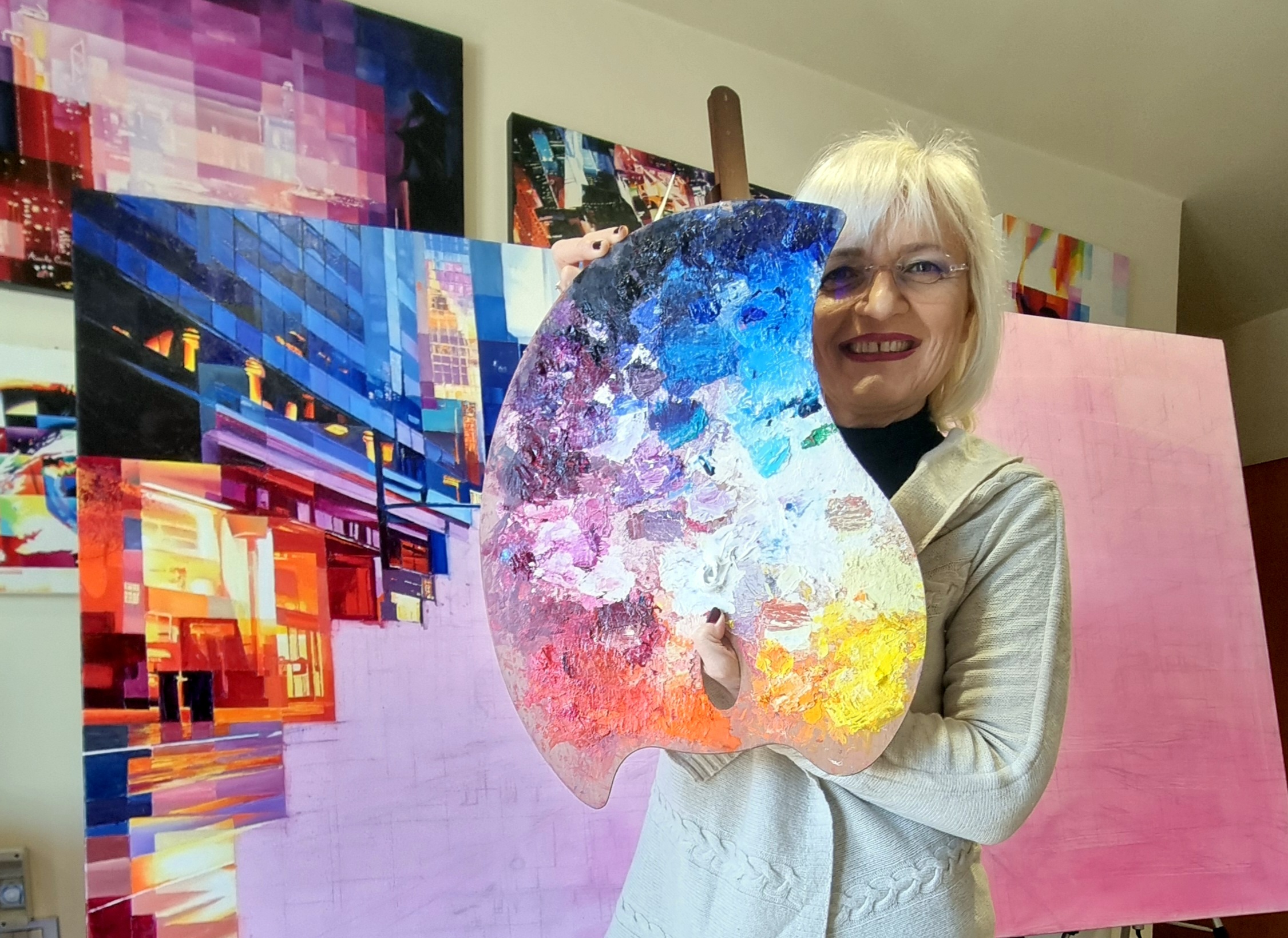
Assunta Cassa is an Italian contemporary painter based in San Benedetto del Tronto – Italy, where she lives and works.
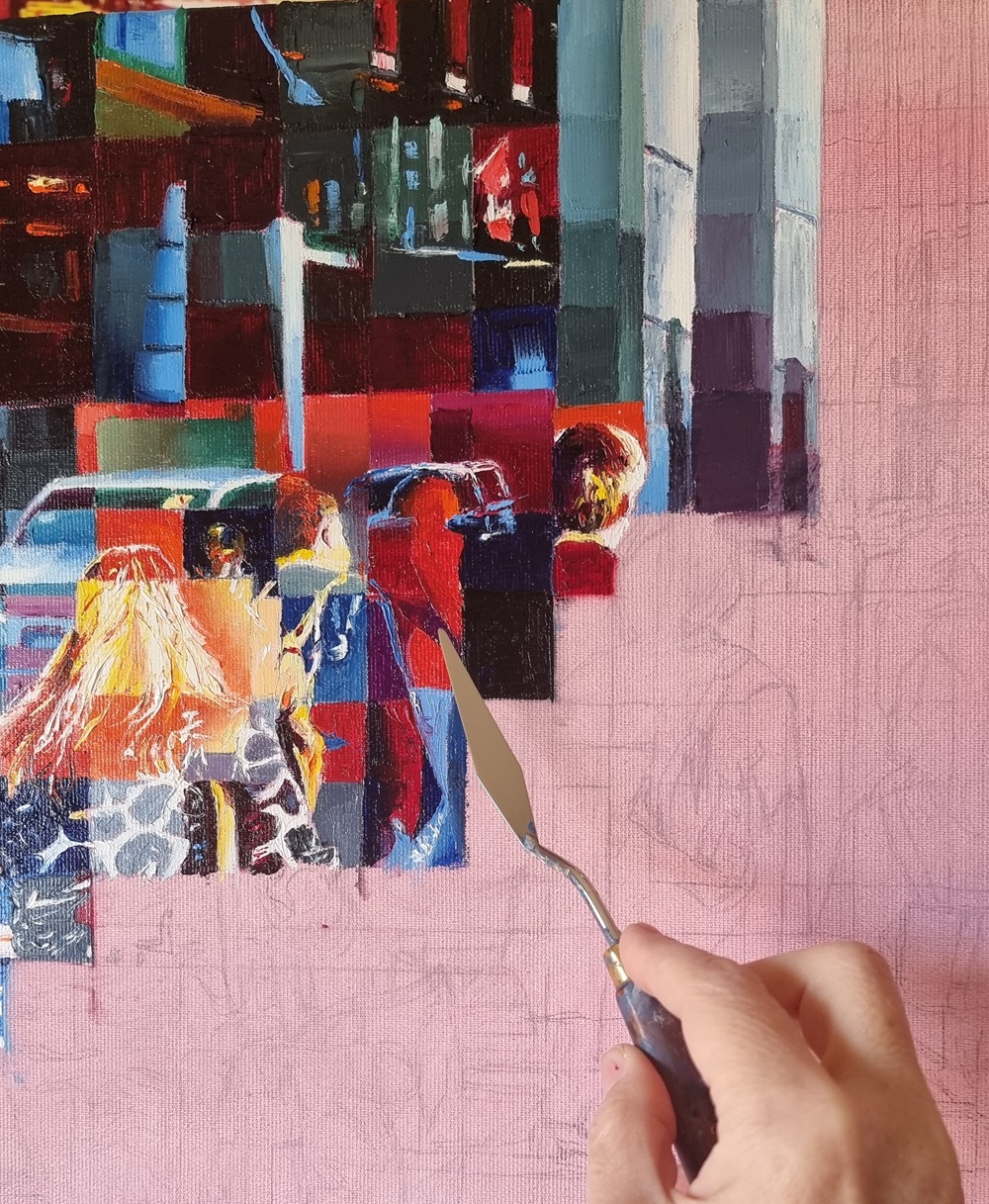
Her practice centres on the pixel pittorico — her original pictorial language, built from fragments of colour applied with a palette knife.
Her work has been exhibited in numerous national and international contexts, including exhibitions in Italy, France, Japan, and Slovakia. Her paintings are held in private collections across Europe and the United States.
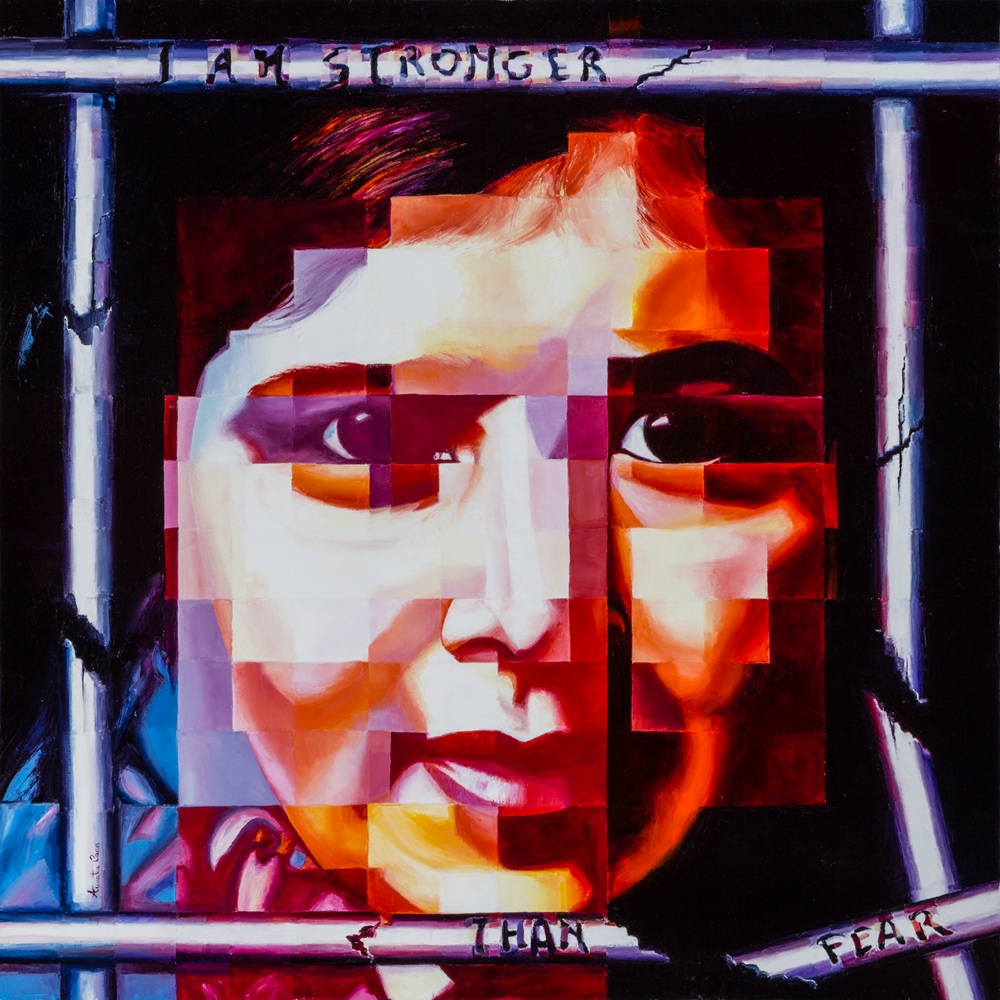
She created the cover artwork for Metaphors, an album by American bassist Alphonso Johnson, now part of his private collection. Her work Malala. Stronger than Fear is included in the permanent public installation Arte del Dialogo – Agorà in Pieve di Cadore, Italy.
Statement
I grew up in Southern Italy, in a family where affection was expressed through duty rather than recognition. In that solid yet rigid and narrow space, a need for freedom took shape — silent and persistent. I searched for myself moving to other cities along the Adriatic coast, through university, work, and even politics, often within structures that closely resembled the one I had left. At forty, painting emerged as a necessity, reawakening a childhood dream.
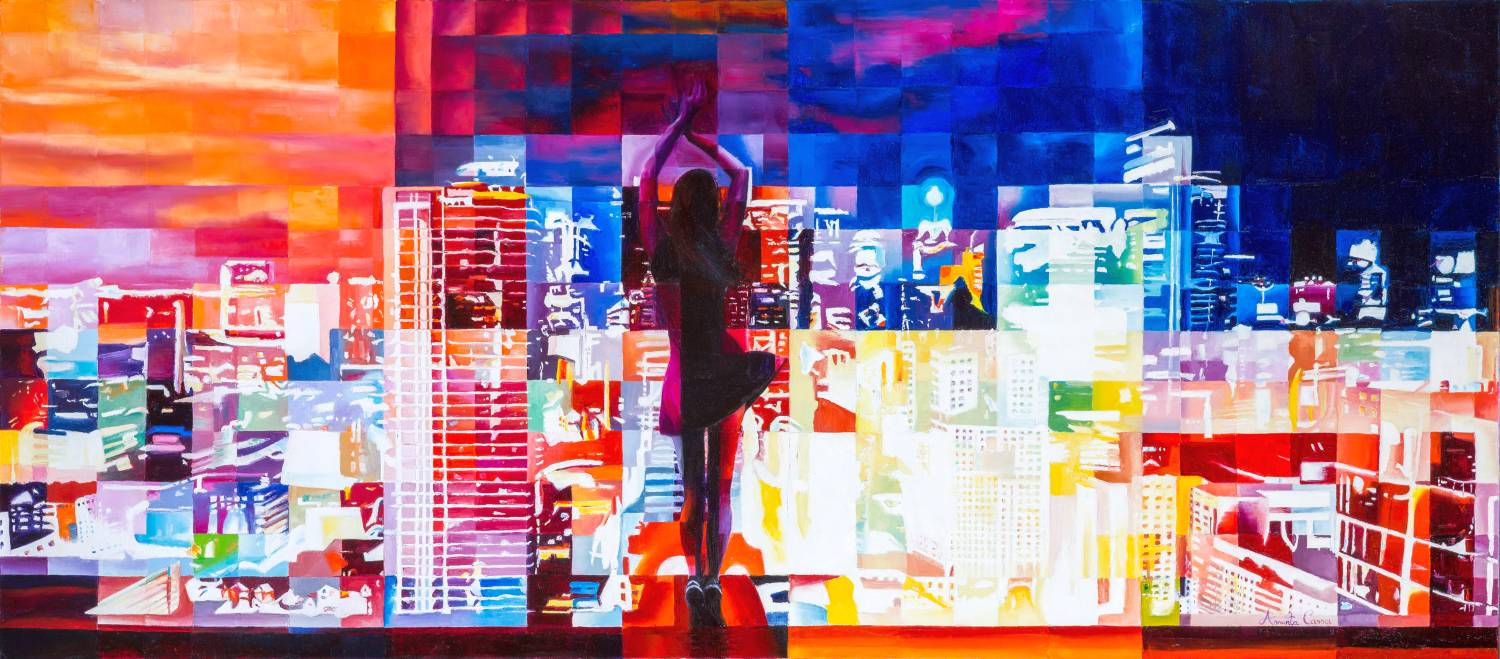
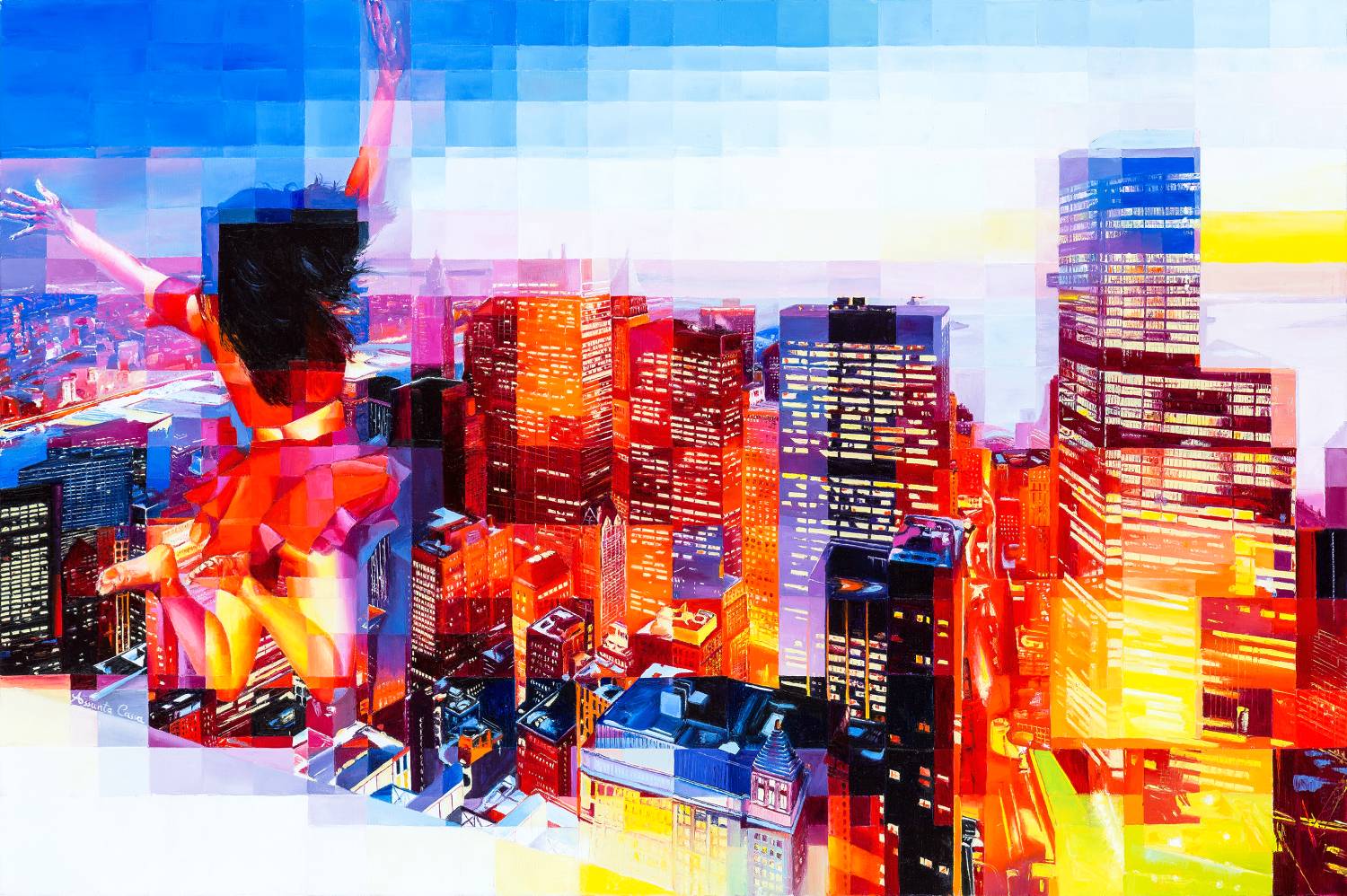
Assunta Cassa, Dancity, 60×170, 2020
Over time, I came to understand that freedom is not the absence of rules, but a complex inner structure — deeply connected to self-awareness and to the world we inhabit. It is discovered within oneself — by removing layers, questioning acquired truths, and accepting contradictions. Years of accounting, European funding projects, and budgeting had already taught me that rigour and creative freedom are not opposites — they need each other. It is within this tension that my research was born.
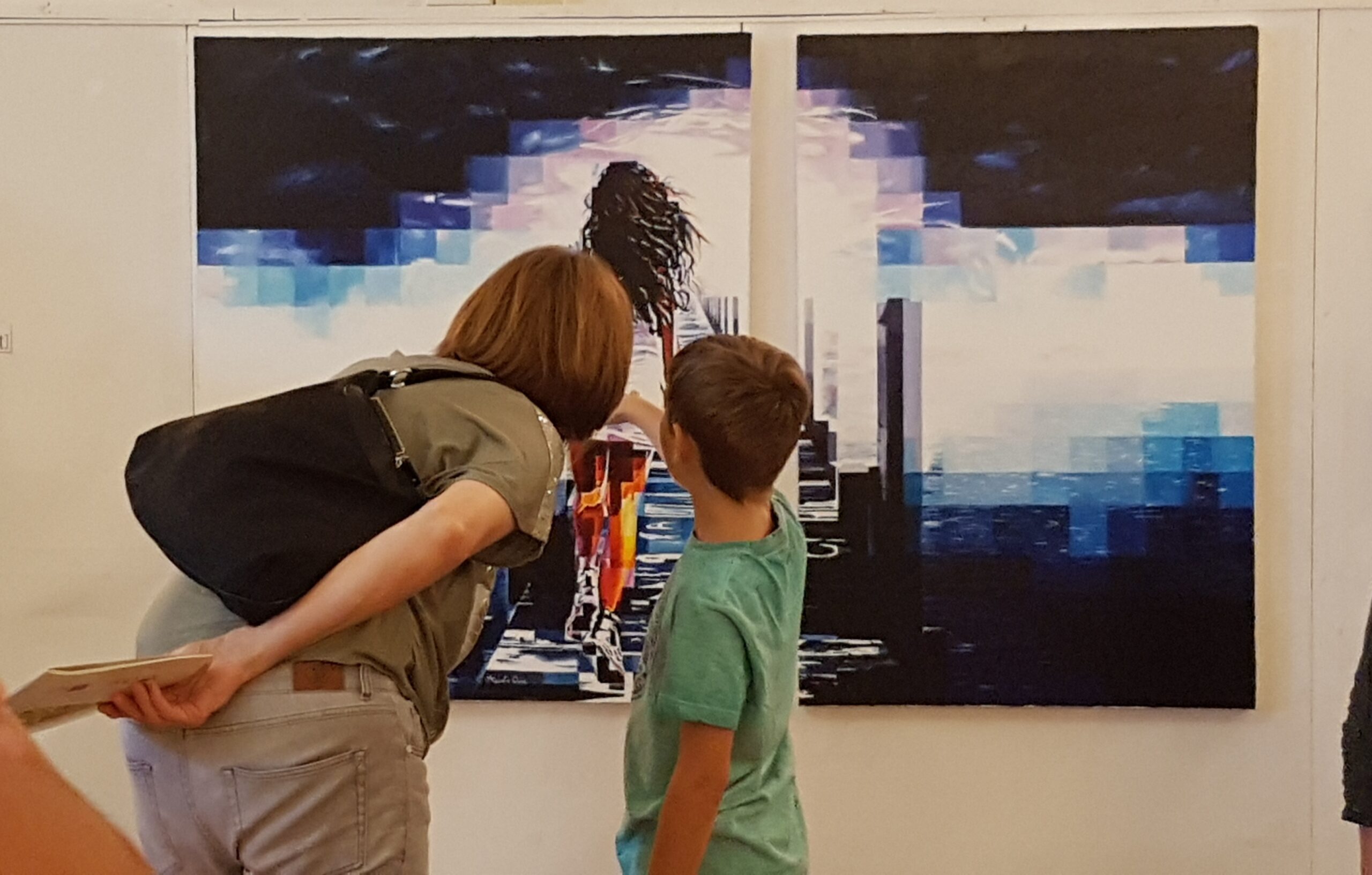
My language is the pixel pittorico: fragments of colour applied with a palette knife, a grid that breaks down and recomposes the image in a single gesture. The gesture is physical, bold, and textured — yet simultaneously subtle. Order and chaos coexist. Figures reveal themselves through fragmentation in a never-stable balance, just as freedom never is. An image that takes shape on the canvas and keeps transforming within the gaze of whoever encounters it.
The first spark came while painting Tango Metropolitano: I was trying to capture the movement and connection that exist only in the instant they occur. Traditional painting was no longer enough. Inspiration came from the structure of digital images — pixels — which I transformed over time into a personal language of oil, colour, and intention. Within the fragment, possibilities multiply.
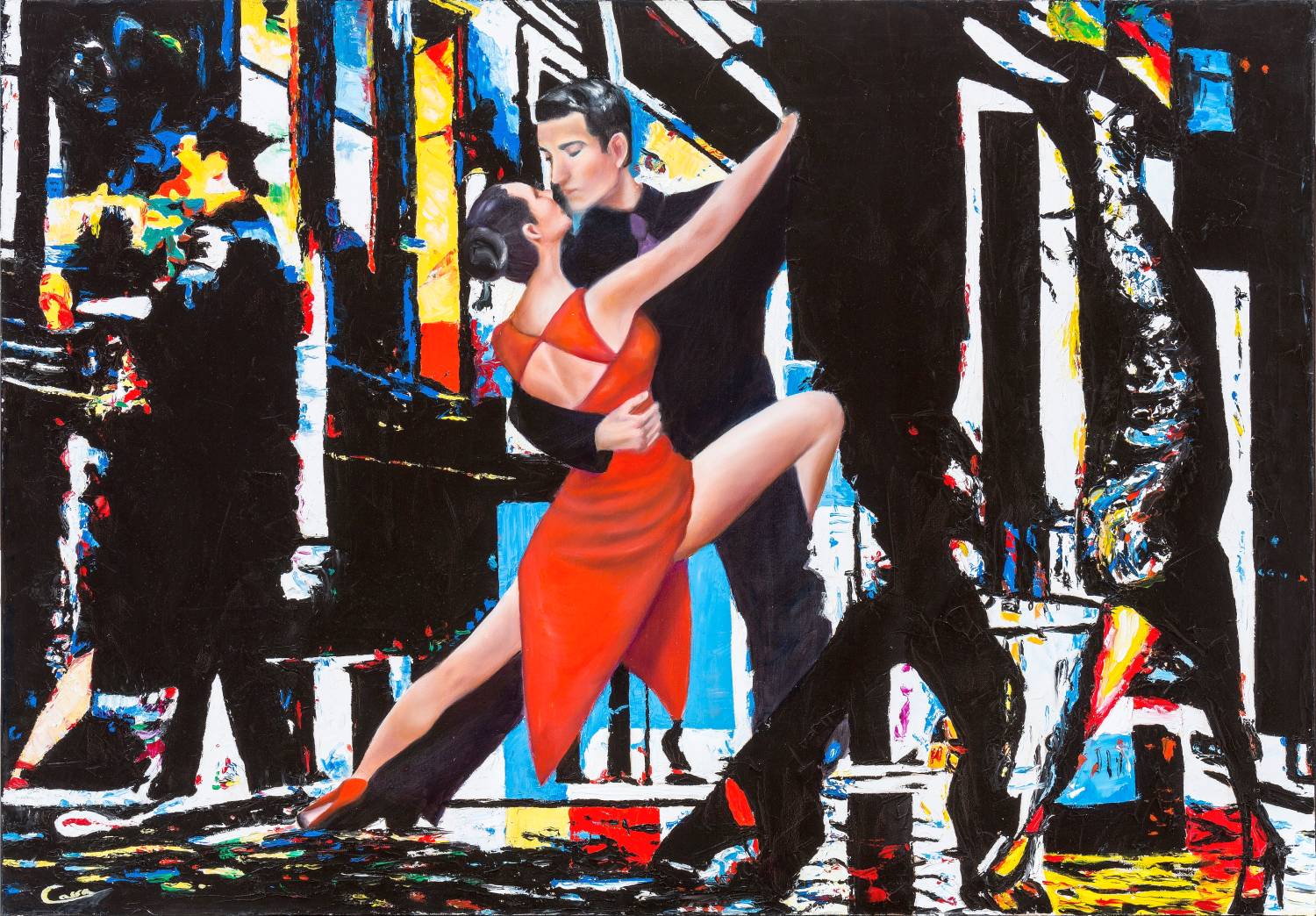
I work across several series, each exploring a different register of freedom: Freedom is the journey — from liberty denied to liberty won, outside and within ourselves. Metropolitan explores the reciprocal transformation between people, spaces, and the city — and the vital energy that can freely emerge from that exchange. Soul Mirrors investigates, through close-up details of the face, the infinite nuances of the human being and our permeability to others — how gazes move through one another and leave their mark. Horizon, the most silent series, pushes toward the edge of openness before the infinite. Le Cassette and The Moons carry this research into the object itself: the container becomes the work, the work becomes the container. In commissioned portraits, fragmentation restores the subject in their simultaneous inner facets.
My painting engages with tradition without repeating it — Mediterranean mosaics, Cézanne, the Expressionists — arriving at a contemporary synthesis: there is more truth in the fragments than in the whole.
There is something that has always guided my hand, beyond conscious choices. I believe that every human being carries within themselves infinite nuances: an inner complexity that cannot be reduced to a single definition. And I believe we are all parts of the same whole — connected, indissoluble, even when we don’t know it. When I paint a face, a figure, a gesture, or the landscapes of a metropolis, I want to paint that double complexity — the infinite within each of us, and the infinite that connects us. The fragment reveals.
In a time that accelerates, simplifies, divides, and flattens, these works propose the opposite: complexity as a value, contradiction and diversity as richness, the fragment as possibility, sharing as completion. My art offers a space where inner complexity is recognised as it is, and whoever looks can feel welcomed in their wholeness — contradictions included.