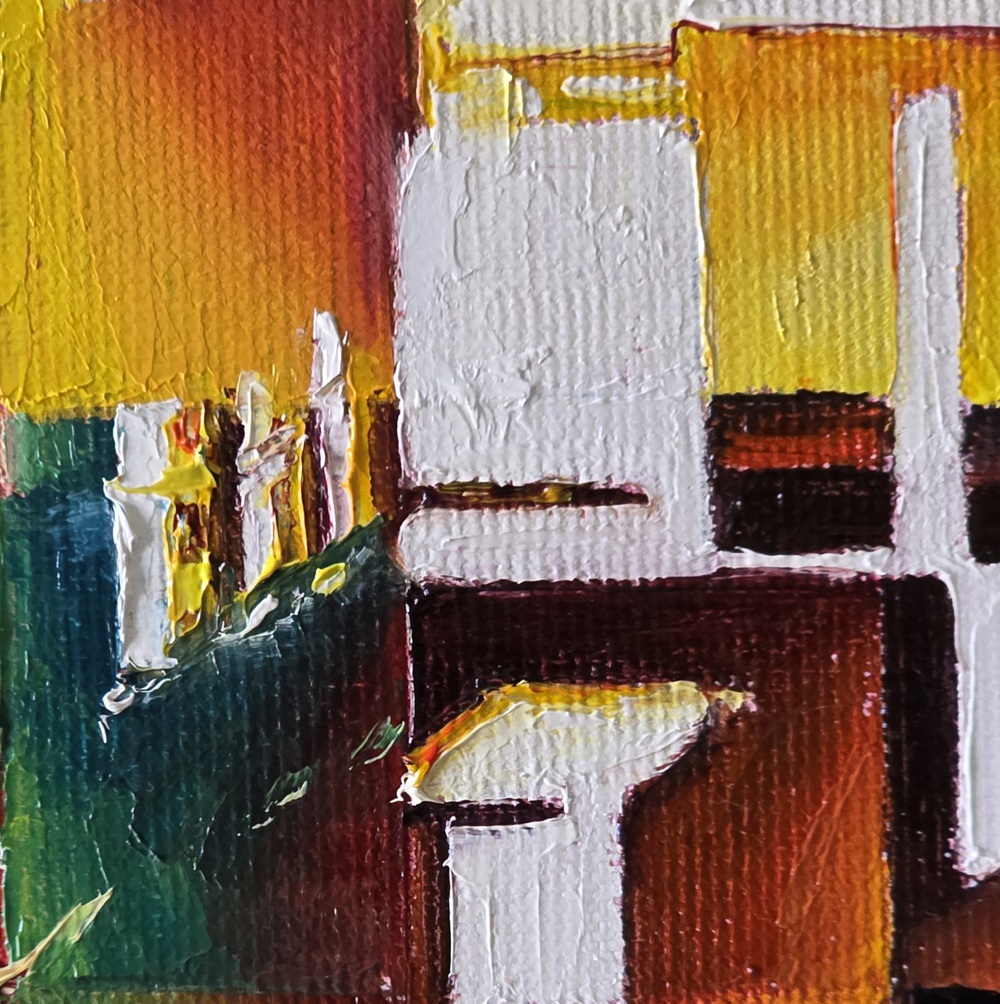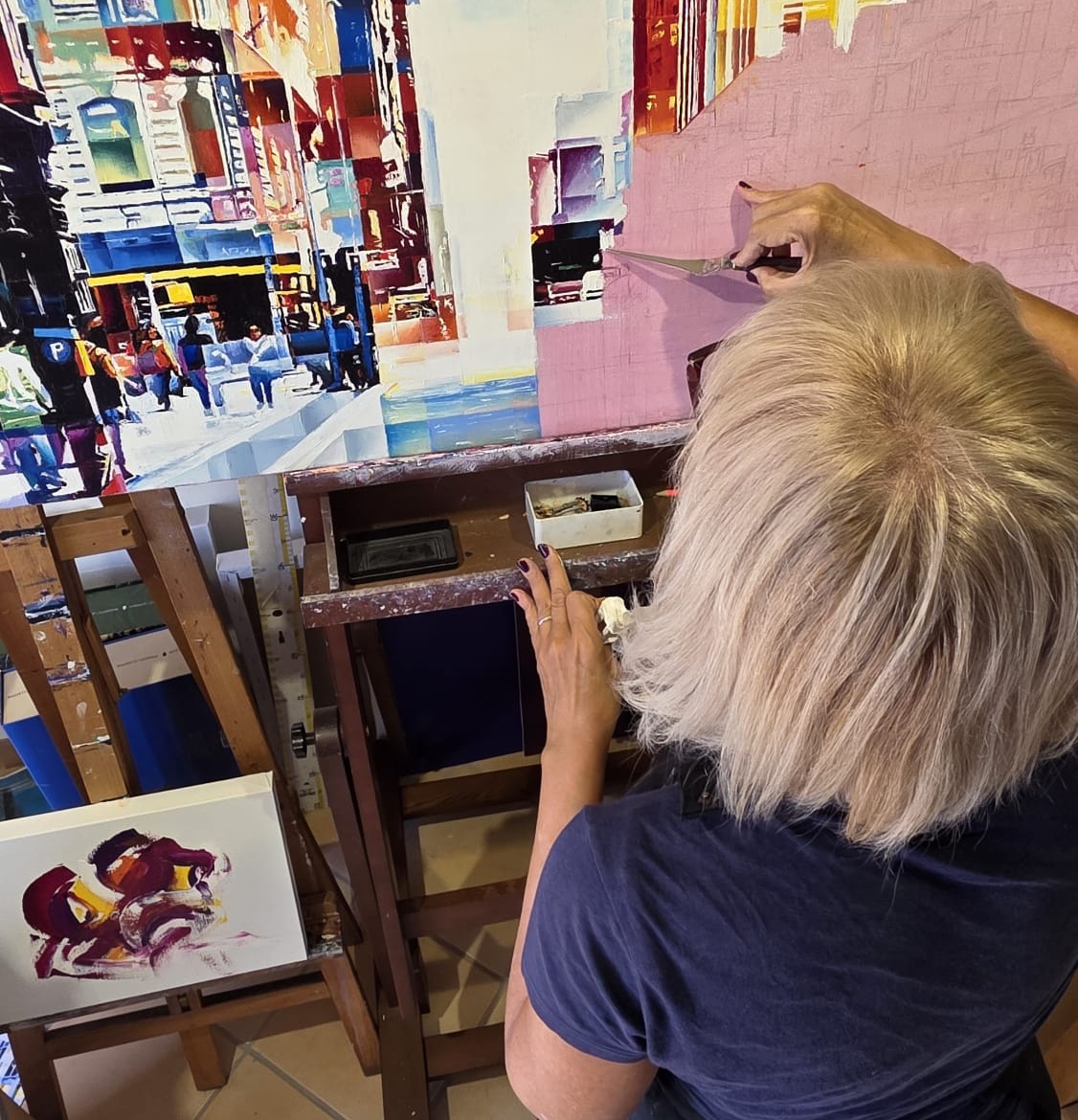
Art is a full-time job. But what happens when the artist is a woman?
Pablo Picasso once said: “Inspiration exists, but it has to find you working.”
Spoken like someone who never had to wonder what to cook for dinner — or remember to go grocery shopping.
Pity that 2026 didn’t get the memo. This year began like this: my mother fell. Two small fractures — and with her, the rhythm of my days collapsed too. Double grocery runs, two kitchens, two homes to manage, a husband who hurt himself in the process of trying to help. Not exactly the conditions Picasso had in mind.
Luckily, she was here in San Benedetto. Had she fallen in Puglia, at her own home, I would have packed up and moved in with her — goodbye palette knife, goodbye colors. It had happened before, a year and a half ago, when my father was ill. You know how it goes.
To be clear: I’m not complaining. I’m the daughter. I love her. I’m glad to be there. And I have a job that — on paper at least — I can “manage around.” That last part is where things get interesting.
Because making art is a full-time job. Sacred, even — for anyone who does it seriously. But when the artist is a woman, that full time tends to get divided with everything else. And everything else, as we all know, never asks permission.
When no one’s keeping track of your hours, your time becomes suddenly elastic — bendable, available, negotiable. Anyone who works from home knows the feeling. For artists, though, something else creeps in: the quiet, persistent suspicion — from others, sometimes from yourself — that it isn’t really work at all.
There’s even a whole day dedicated to women — March 8th, yesterday as it happens. Flowers, social media posts, a few speeches about female empowerment. Then the next morning, it’s back to the grocery list.
So you end the day as exhausted as someone who ‘really worked’ — except your work doesn’t count anywhere. Weekends become catch-up time. So do nights. Catch-up, as if that were possible — the world didn’t stop. And neither did everything else.
Here’s the strange part: inspiration comes anyway. It always does. It just struggles to find you actually painting. Even when you’re somewhere else entirely, part of your mind never stops watching, collecting, filing things away — until ideas accumulate in layers, quiet and invisible, while the canvases wait.
A paradox, then: the inspiration exists. The time doesn’t. The fragments are there — what’s missing is the canvas and the knife to bring them together.
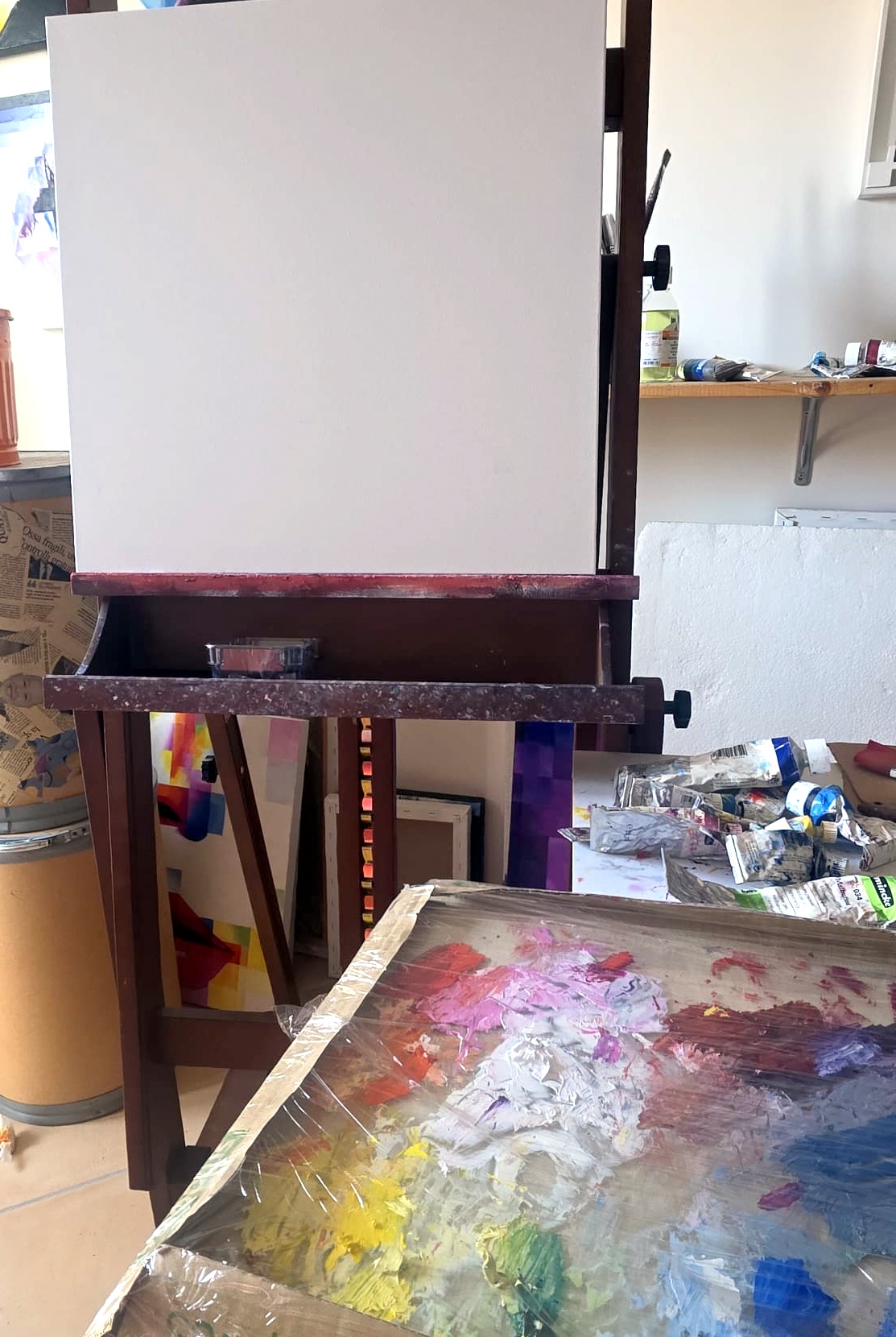
I’ll admit it: in those moments, I look at painters who produce a new work every week with something close to envy. For them, inspiration finds them actually at work.
The freedom to paint is never absolute — for anyone. But for women, it tends to be negotiated, carved out, claimed at the edges of other people’s time.
Art is a full-time job that, for us, tends to start when everything else is done.
Picasso probably never had to choose between a flash of inspiration and a shopping list.
I do. Every single day.
But somewhere between the errands and the deadlines, I carry my colors with me. One pixel at a time — even when there’s no canvas yet.
Assunta Cassa
Contemporary painter