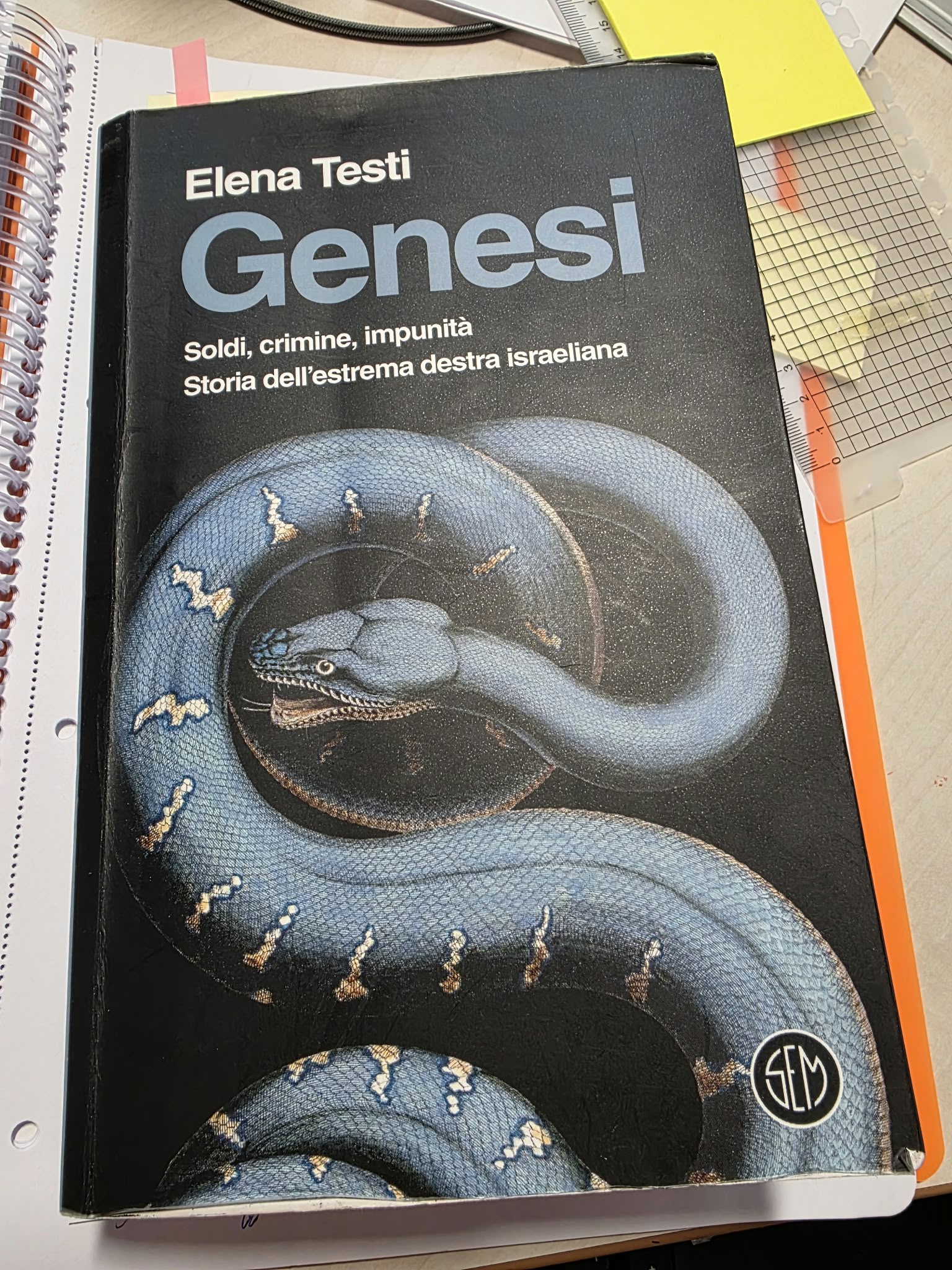
Some books begin to stir something in us as we read and continue to do so long after we have closed them. Elena Testi’s Genesi was one of those books for me.
I first picked it up because I was due to moderate its presentation at the Palazzina Azzurra in San Benedetto del Tronto, as part of the Incontri con l’autore “Mimmo Minuto” series organised by the Associazione I Luoghi della Scrittura. It would also be my chance to meet Elena Testi and talk with her about her work. I wanted to arrive prepared: to understand her research, follow the history she reconstructs and find the questions that might open up a meaningful conversation.
When a Book Stays with You
Yet, page by page, Genesi began to reach far beyond the evening I was preparing for. What I was reading touched something much closer to home, bringing with it thoughts, emotions and questions about the way I myself look at the world.
I found myself confronting a reality I had perhaps sensed but whose depth and brutality I had never fully grasped. Genesi leads us through the people and extremist ideas at the heart of this history, showing how beliefs, interests, money and power can become intertwined, endure across decades, gain ground and legitimacy, and eventually shape decisions that affect thousands of lives.
What shook me most was confronting, once again, the human capacity to inflict suffering on other human beings — the point at which cruelty can become acceptable, even defensible, once we cease to see another person fully as a human being and their life, their pain, even the lives and pain of innocent children, begin to count for less.
Through the Eyes of a Child
Those pages stayed with me after I closed the book, carrying questions, emotions and images into the rest of my day. One image kept returning with particular force: the eyes of children.
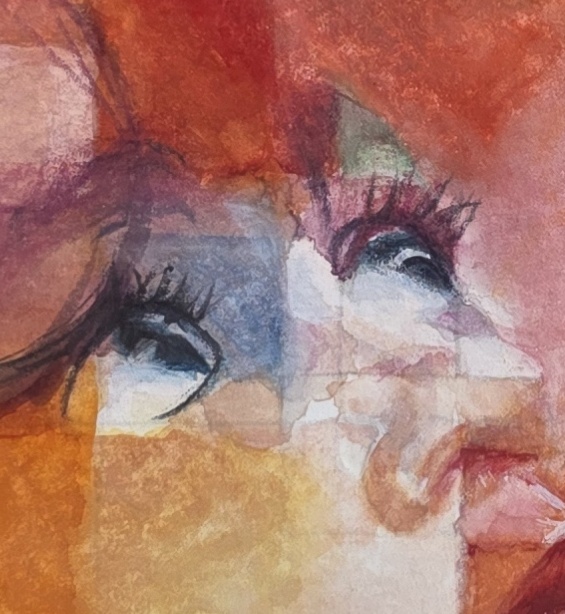
I thought about children living with the consequences of decisions made by adults; about eyes witnessing war, violence, destruction, fanaticism and fear. I wondered what they truly see, what they can possibly make of what is happening around them, and what mark such suffering will leave on their lives — suffering caused by the very adults who should protect them, guide them as they grow, teach them trust and give them the space to play, learn, love and imagine a future of their own.
And among those children, I saw my own inner child.
I recognised her in the part of me that still knows how to be astonished, outraged and full of questions when another human being is hurt; the part that continues to long for a different world and, for that very reason, keeps trying to understand this one.
From Reading to Painting
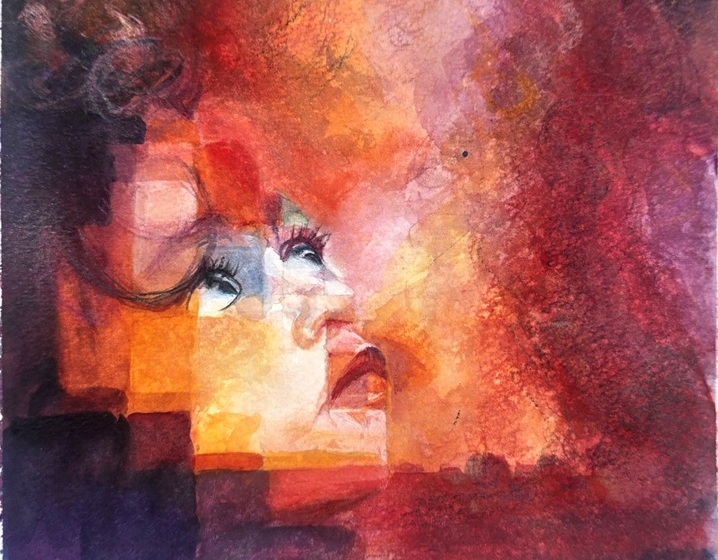
I took a sheet of watercolour paper and painted her.
The colour came with a force I can still remember: warm and cool reds, oranges, yellows and deep, dark violets. On the paper, the colours met, overlapped, mingled and broke into fragments. In the visual language of Fragments on Paper, those fragments formed a structure across the child’s face, defining her eyes and features. Around her, that structure began to loosen, the fragments dispersing into colour, flaring like fire before almost dissolving into smoke.
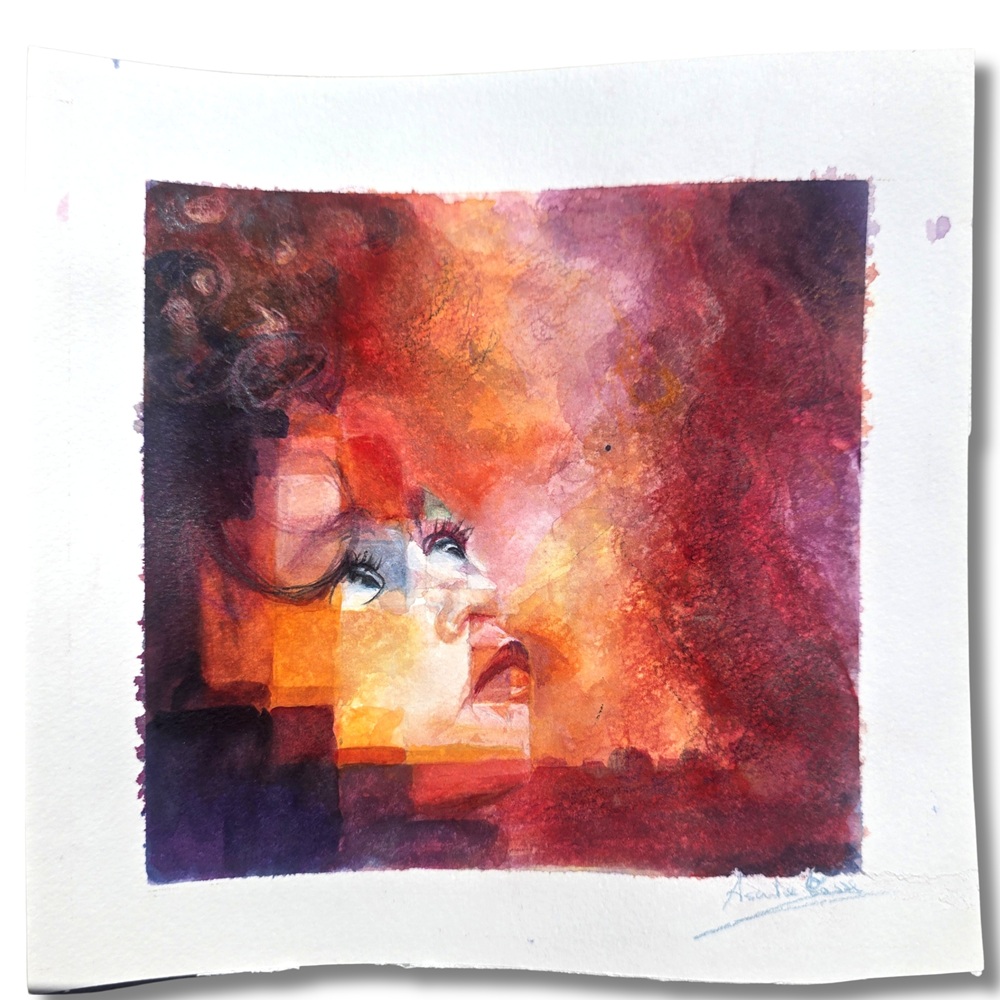
When I finished, I stayed there looking at her, especially at her eyes turned upwards. Towards what? Towards whom? It was in that space, between her gaze and mine, that the question came — and became the title of the work: What Have You Done?
It is a child’s question to the adult world, simple and immense at once — to those who have built that world and continue to shape it every day. But then the question turned back towards me. It was no longer only about the responsibility of others; it asked me to consider my own: What Are We Doing?
Meeting Elena Testi
A few days later, on 11 August, I finally met Elena. I was struck by the rigour she brings to her work as a journalist and writer, and by her ability to make a complex subject accessible without losing any of its depth.
We talked about Genesi, the history it explores, the people involved, and how certain ideas can take root, evolve and eventually shape reality.
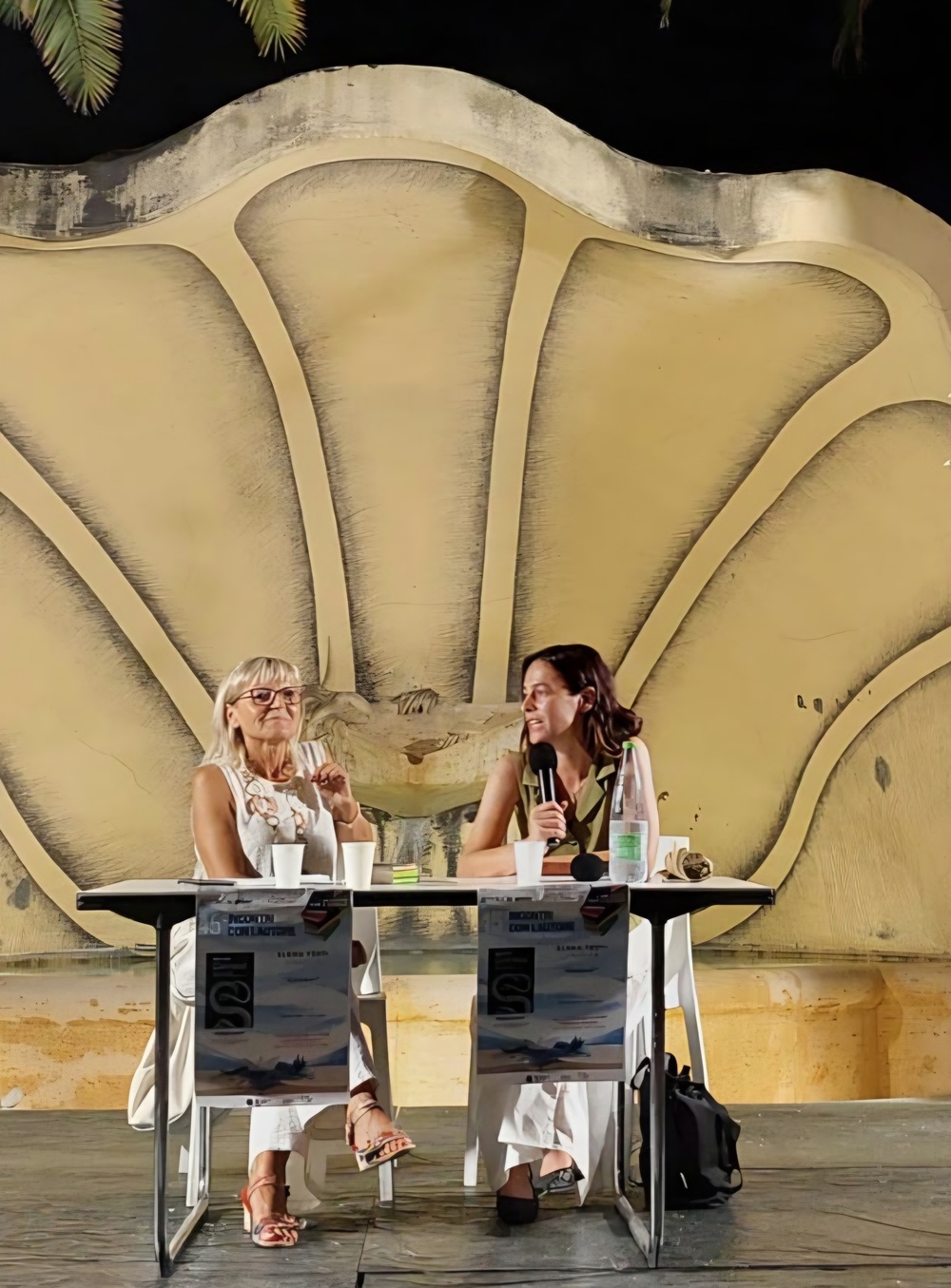
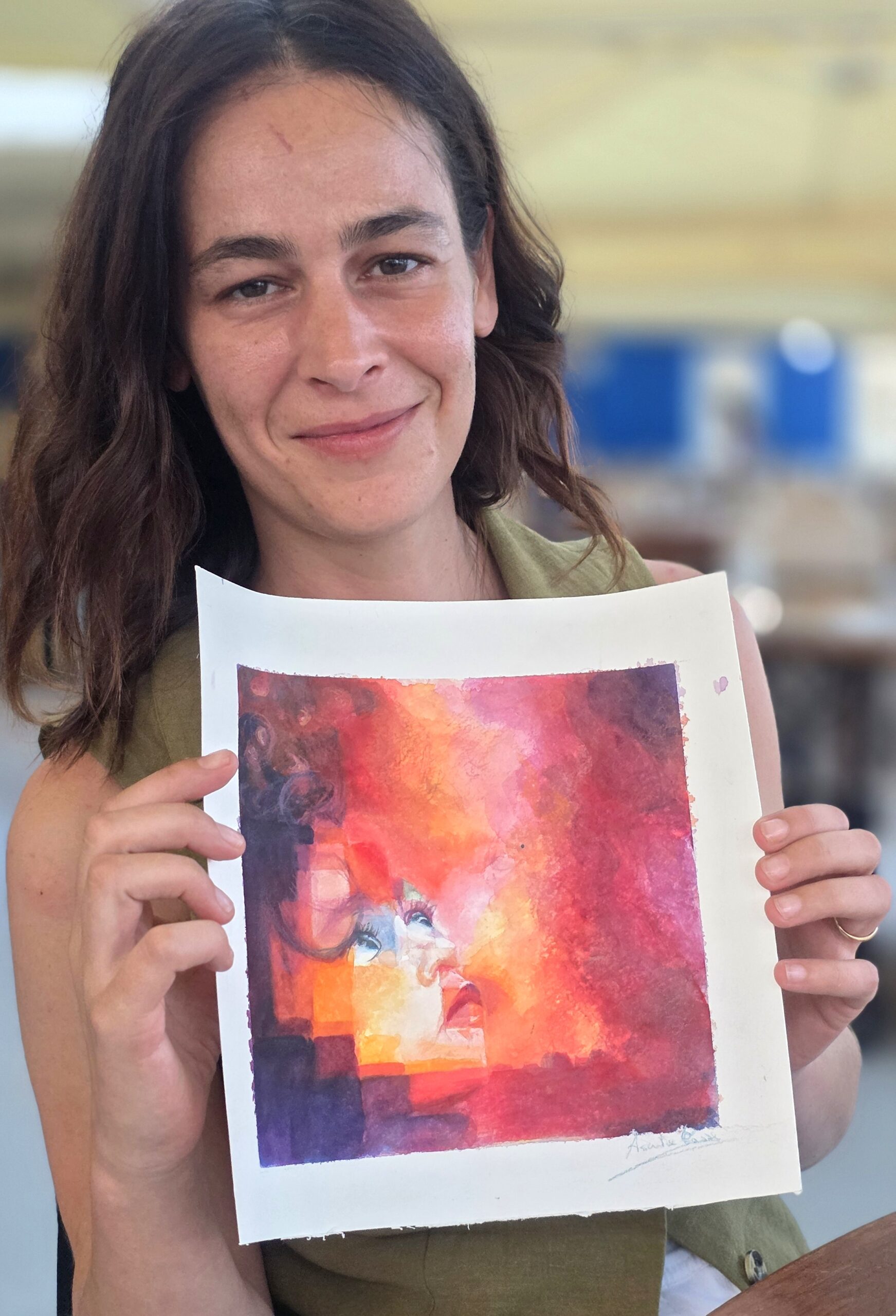
I had brought the work with me, and at the end of the evening I gave it to Elena. I like knowing that this child stayed with her, because it was her Genesi that left such a deep mark on me, opening a path from reading into painting — becoming colour, fragments and eyes.
It is a path I want to keep exploring, following the question that travelled from the child back to me and that now concerns all of us: What Are We Doing?
And if there is one thing I would like to share alongside this work, it is an invitation to read Genesi: to know more, to understand more, to move beyond what reaches us each day in a headline or an image. I opened the book to prepare for a conversation and closed it with far more questions than I had begun with, a sharper awareness of the complexity of what is happening, and an even stronger need to keep trying to understand.
So that I, too, can try to do my part.
At the time of writing, Genesi is available in Italian; an English edition has not yet been published.